

How to Get Staff to Actually Use a New Office After a Refurbishment
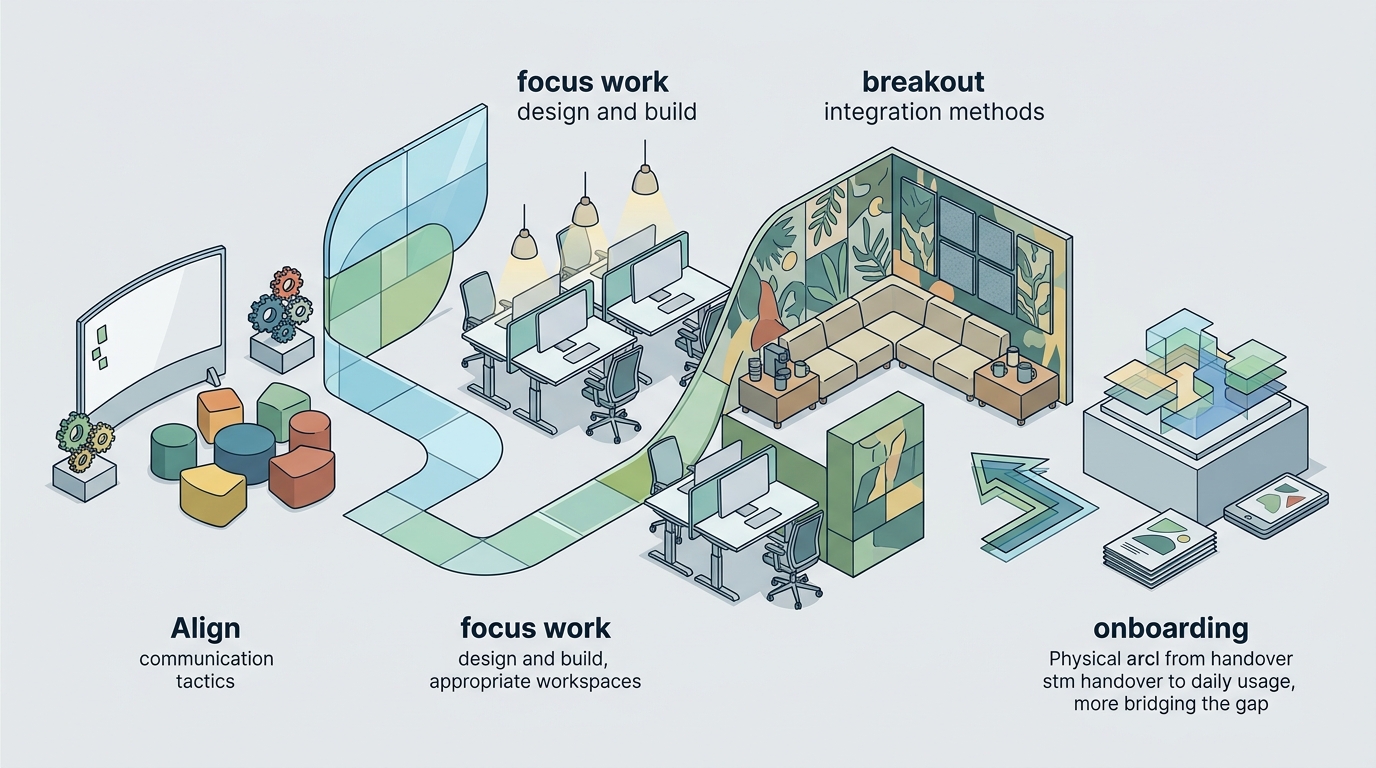
Staff adoption is the final, often overlooked stage of workplace transformation. Without a deliberate change management strategy, even the best-designed office will be underutilized. This guide explains how to bridge the gap between physical delivery and daily usage. It covers the four-stage framework, communication tactics, and integration methods that ensure your team embraces their new environment.
Change Management Strategy
Change management is the structured process of guiding individuals and teams from their current state to a desired future state. In the context of office refurbishment, it is the bridge between construction completion and cultural adoption. Most organizations treat the physical build as the project's end point. This is a critical error. The physical space is merely the stage; the performance is the people using it.
When staff are not involved in the process, they often resist the new environment. They may revert to old habits, such as hoarding space or avoiding new collaboration zones. A robust strategy treats the workplace as a people problem before it is a property one. It requires active participation from leadership and a clear narrative about why the change is happening. Without this, the investment in design and fit-out yields diminishing returns.
The Role of Leadership
Leadership must model the desired behaviors. If managers do not use the new breakout areas or collaboration zones, staff will not either. Leaders need to be visible champions of the new space. They should host informal meetings in new areas and encourage their teams to explore the layout. This visibility signals that the new environment is not just a physical upgrade, but a cultural shift.
Identifying Resistance
Resistance often stems from a lack of understanding or fear of the unknown. Staff may worry that open-plan layouts will reduce their privacy or that new technology will be difficult to use. Identifying these concerns early allows the project team to address them through communication and design. For example, if privacy is a concern, the design should include a mix of focus rooms and quiet zones. Addressing these fears head-on builds trust and reduces friction during the transition.
The Align Stage: Building the Brief
Adoption begins long before the first brick is laid. The Align stage is where the organization defines what it needs from its workspace. This is not just about square footage or desk counts. It is about understanding how the organization works, what its culture values, and what its people need to perform at their best. A brief built on assumptions rather than data will lead to a space that feels alien to the users.
During this stage, it is essential to engage a wide range of stakeholders. This includes leadership, middle management, and front-line staff. Surveys, workshops, and focus groups help gather insights into current pain points and future aspirations. The goal is to create a shared vision that everyone can buy into. When staff see their own needs reflected in the brief, they are more likely to support the outcome.
Workplace Needs Analysis
A workplace needs analysis involves profiling the organization's activities. It looks at how teams collaborate, how much time is spent in meetings, and what types of work require focus. This data informs the spatial planning. For instance, if a team spends 60% of its time in collaborative work, the design should prioritize shared spaces over individual desks. This data-driven approach ensures the space is fit for purpose.
Stakeholder Alignment
Design for Adoption
Design is the physical manifestation of the strategy. However, good design is not just about aesthetics. It is about functionality, usability, and psychological comfort. A space that looks beautiful but is difficult to navigate or use will be rejected by staff. Design for adoption means creating an environment that feels intuitive and welcoming. It should encourage the behaviors the organization wants to promote.
Flexibility is a key component of adoption. Staff need to feel that the space can adapt to their needs. This includes a variety of working environments, from open-plan areas to private offices and quiet pods. It also includes flexible furniture that can be easily reconfigured. When staff have control over their environment, they are more likely to feel ownership and comfort.
Creating Cultural Anchors
Cultural anchors are spaces that reflect the organization's identity and values. They are the heart of the office, where people gather, socialize, and connect. These spaces should be designed to be inviting and inclusive. They should encourage interaction and build a sense of community. For example, a central breakout area with comfortable seating and good lighting can become a hub for informal collaboration and social connection.
Intuitive Wayfinding
Wayfinding is the process of helping people navigate a space. In a new office, clear wayfinding is essential for adoption. If staff cannot find their way around, they will feel frustrated and disoriented. This can lead to avoidance of certain areas. Good wayfinding uses clear signage, logical layouts, and visual cues to guide people. It should be intuitive and require minimal effort. When navigation is easy, staff are more likely to explore and use the full range of spaces available.
Delivery and Communication
Delivery is the execution phase of the project. However, communication is the thread that runs through every stage. It is not just about sending emails or holding meetings. It is about creating a narrative that engages and informs. Communication should be consistent, transparent, and two-way. It should keep staff informed about progress, changes, and next steps. It should also provide a channel for feedback and questions.
During the construction phase, disruption is inevitable. Clear communication helps manage this disruption. Staff should know what to expect, when it will happen, and how it will affect them. This reduces anxiety and builds trust. It also shows that the project team is in control and committed to minimizing impact. Transparent communication is a key factor in successful adoption.
Pre-Move Communications
Pre-move communications prepare staff for the transition. This includes information about the new layout, furniture, and technology. It also includes practical details, such as parking, access, and amenities. These communications should be clear and concise. They should answer the questions staff are likely to have. By providing this information in advance, you reduce uncertainty and build excitement for the move.
Managing Disruption
Construction in an occupied building requires careful phasing and communication. Staff should be kept informed about noise, dust, and access restrictions. This can be done through regular updates, such as newsletters or intranet posts. It can also be done through face-to-face briefings. The goal is to keep the business running while the project is delivered. Minimizing disruption is a key part of maintaining staff morale and support.
Integration and Onboarding
Integration is the stage where the new workplace becomes part of daily life. It is not a one-off event, but an ongoing process. Onboarding is the first step in this process. It involves introducing staff to the new space and helping them feel comfortable. This can include tours, training sessions, and informal social events. The goal is to make the new environment feel familiar and welcoming.
Integration also involves embedding new ways of working. This may include training on new technology, coaching on collaboration skills, or support for change in work habits. It is about helping staff adapt to the new environment and make the most of it. This support should be available for some time after the move, not just on day one. Ongoing engagement is key to long-term adoption.
Staff Briefings and Tours
Staff briefings and tours are essential for onboarding. They provide a practical introduction to the new space. They help staff understand the layout, find their way around, and identify key areas. Tours should be interactive, allowing staff to ask questions and explore. They should also highlight the features and benefits of the new design. This helps build a positive first impression and encourages exploration.
Ongoing Engagement
Ongoing engagement keeps the momentum going after the initial move. This can include regular check-ins, feedback sessions, and social events. It can also include showcasing success stories and highlighting how the new space is being used. This helps reinforce the value of the investment and encourages continued use. It also provides an opportunity to address any issues that arise and make adjustments as needed.
Measuring Success
Measuring success is about tracking the impact of the workplace transformation. It is not just about occupancy rates or desk utilization. It is about understanding how the space is being used and how it is affecting people. Metrics should be aligned with the goals set in the Align stage. They should provide insight into adoption, satisfaction, and performance.
Common metrics include space utilization, employee satisfaction scores, and productivity indicators. Space utilization can be tracked using sensors or manual counts. Employee satisfaction can be measured through surveys. Productivity can be assessed through performance data or self-reported metrics. By tracking these metrics over time, you can identify trends and make informed decisions about future improvements.
Post-Occupancy Evaluation
A post-occupancy evaluation (POE) is a formal assessment of the new space after it has been in use for a period of time. It involves collecting data on how the space is being used and how it is perceived by users. This data is then analyzed to identify strengths and weaknesses. The findings are used to make recommendations for improvements. A POE is a valuable tool for ensuring that the space continues to meet the organization's needs.
Iterative Improvement
Workplace design is not static. It should evolve with the organization. Iterative improvement involves making small, ongoing changes based on feedback and data. This can include adjusting layouts, updating furniture, or adding new amenities. It shows that the organization is committed to listening to its people and adapting to their needs. This continuous cycle of feedback and improvement is key to long-term adoption and satisfaction.
Key Takeaways
- Change management is the bridge between physical delivery and cultural adoption.
- Leadership must model desired behaviors to drive staff engagement.
- The Align stage is where the brief is built on data, not assumptions.
- Design for adoption means creating intuitive, flexible, and welcoming spaces.
- Communication should be consistent, transparent, and two-way throughout the project.
- Integration involves onboarding, training, and ongoing engagement.
- Measuring success requires tracking utilization, satisfaction, and performance.
- Iterative improvement ensures the space evolves with the organization.
Frequently Asked Questions
How long does it take for staff to adapt to a new office?
Adaptation varies, but most staff begin to feel comfortable within a few weeks. Full adoption, where the new space becomes second nature, can take several months. Ongoing support and engagement help accelerate this process.
What is the most common reason for low adoption?
The most common reason is a lack of involvement in the design process. When staff feel their needs were not considered, they are less likely to embrace the new environment. Early engagement is key to preventing this.
How can we measure the success of a workplace transformation?
Success can be measured through space utilization, employee satisfaction surveys, and productivity metrics. A post-occupancy evaluation provides a comprehensive assessment of the space's performance.
Is it necessary to have a dedicated change manager?
While not always mandatory, a dedicated change manager or lead is highly beneficial. They can coordinate communication, manage resistance, and ensure the integration process is well-structured.
What role does technology play in adoption?
Technology can enhance adoption by making the space more functional and intuitive. However, it must be user-friendly and well-supported. Poorly implemented technology can hinder adoption rather than help it.
How do we handle resistance from senior leadership?
Engage senior leadership early in the process. Show them the data and the benefits. Make them visible champions of the change. Their support is critical for driving adoption across the organization.
Conclusion
Getting staff to use a new office is not about forcing them to change. It is about creating an environment that supports their needs and encourages their engagement. By following a structured approach, from alignment to integration, you can ensure that your workplace transformation delivers lasting value. Spectrum Workplace specializes in this end-to-end process, ensuring that the spaces we create are not just built, but truly adopted. To start your journey, today.