

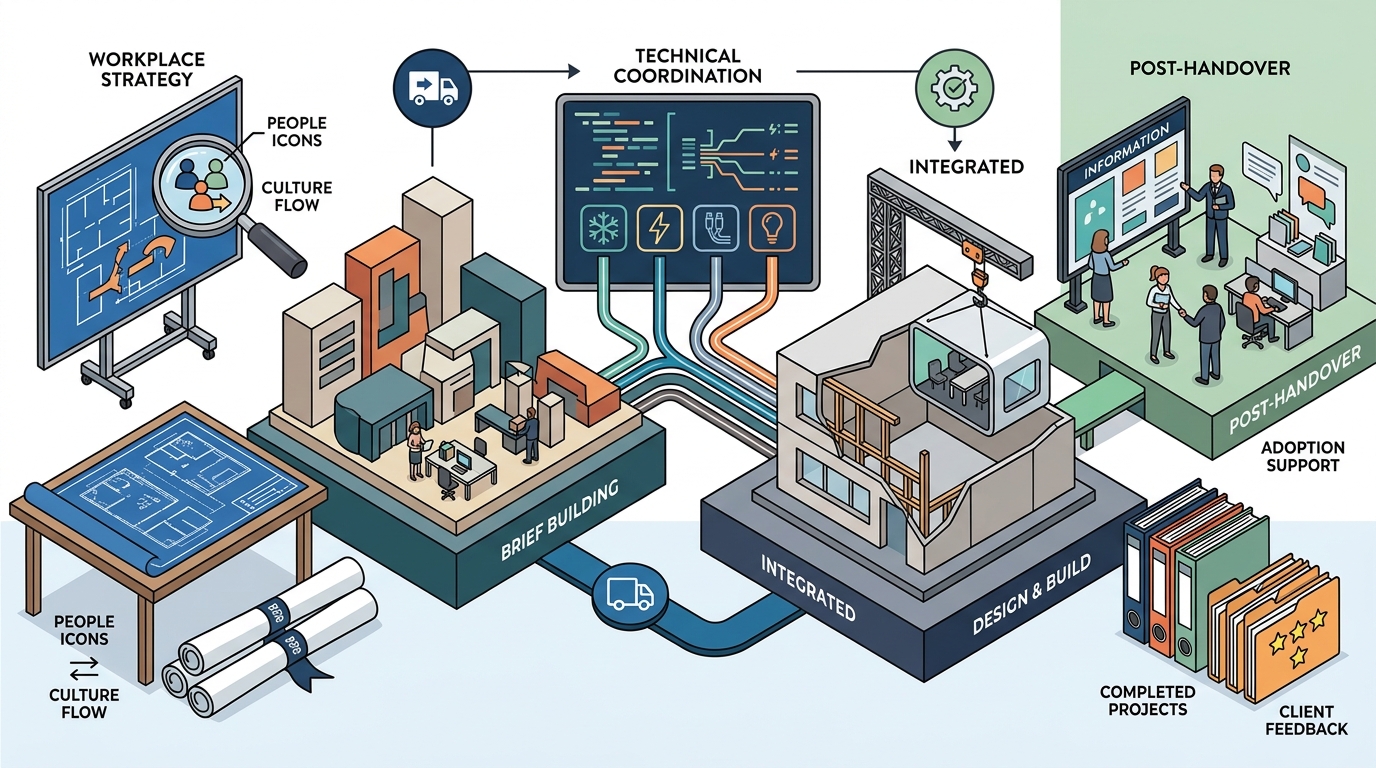
When choosing an office relocation specialist, prioritize a partner who manages the entire lifecycle from strategic brief building to post-handover staff onboarding. You need a team that treats the move as a people and culture challenge, not just a logistical task. This ensures your organization adapts smoothly to the new environment without losing productivity or morale during the transition. according to 1 32 13
Strategic Brief Building and Needs Analysis
Many relocations fail because they begin with a building search rather than a clear understanding of organizational needs. A specialist must first define what the new space should achieve for your teams. This involves structured leadership sessions and staff engagement to build a comprehensive brief. Without this foundation, the physical move often results in a space that does not fit how the business actually operates.
For example, a global fund services firm might require a balance of open collaboration and private focus areas to support a fast-paced, remote-heavy workforce. The specialist must identify these specific working patterns before any site selection occurs. This strategic alignment ensures the chosen location and layout support both current operations and future growth. according to 1 32 13
End-to-End Project Management Capability
Office relocation is a complex process involving parallel workstreams that must be coordinated seamlessly. A reliable specialist manages programme management, contractor coordination, and statutory compliance simultaneously. They act as a single point of accountability, keeping your leadership team informed without burdening them with operational details. This holistic approach prevents gaps in communication that can derail a project.
Consider the technical complexity of integrating new data, HVAC, and electrical systems in a live or new environment. A specialist with strong technical coordination skills ensures these systems are installed correctly and on time. This reduces the risk of delays and ensures the office is fully functional on day one, protecting your business continuity.
People-Centric Design and Culture Integration
The success of a relocation is ultimately measured by how well your people adapt to the new space. A specialist should focus on workplace culture design, ensuring the layout encourages connection, trust, and collaboration. They understand that the physical environment directly impacts employee well-being and brand image. By designing for human behavior, they create a space that feels intuitive and engaging for your staff.
For instance, a creative gaming studio might need a vibrant social hub to break down departmental silos and encourage informal interaction. The specialist designs these cultural anchors into the floor plan, ensuring the new office supports the company's identity. This people-first approach helps retain talent and boosts morale during a potentially disruptive change.
Post-Handover Integration and Onboarding
Handover is not the end of the project; it is the beginning of adoption. A true relocation specialist remains involved after the keys are handed over to support staff integration. They develop and deliver structured onboarding programmes that prepare your organization for the transition. This includes pre-move communications, staff briefings, and ongoing engagement to embed new ways of working. Without this support, employees may struggle to use the new space effectively, leading to underutilization and frustration.
By acting as active participants in your organization's transition, the specialist ensures your people arrive informed and engaged. They help the team make the new environment their own, turning a physical move into a cultural upgrade. This long-term commitment to adoption is a key differentiator when selecting a relocation partner.
Key Takeaways
- Look for a specialist who starts with strategic brief building to align the move with organizational goals.
- Ensure the partner manages all workstreams, including technical coordination and statutory compliance, under one roof.
- Verify that the design process prioritizes workplace culture and employee well-being over aesthetics alone.
- Confirm the specialist offers post-handover onboarding and integration support to drive successful adoption.
- Choose a director-led team that provides consistent, high-level accountability throughout the entire project lifecycle.
Frequently Asked Questions
Why is brief building important before selecting a new office?
Brief building ensures the new space meets your actual operational and cultural needs. It prevents the common mistake of choosing a building first and trying to fit your business into it later.
How does a specialist manage the complexity of a relocation?
They coordinate all parallel workstreams, including design, construction, and IT, under a single programme management framework. This ensures nothing falls through the gaps and keeps leadership informed.
What role does culture play in office relocation?
Culture dictates how people use space. A specialist designs the layout to support your specific cultural values, such as collaboration or focus, ensuring the new office reinforces your brand identity.
Do relocation specialists stay involved after the move?
Yes, top-tier specialists provide post-handover integration and onboarding. They help staff adapt to the new environment and embed new ways of working to ensure long-term success.
How do I know if a specialist is director-led?
Ask about the level of senior involvement in your project. A director-led approach means senior leaders are directly involved in decision-making and problem-solving, ensuring higher accountability.