
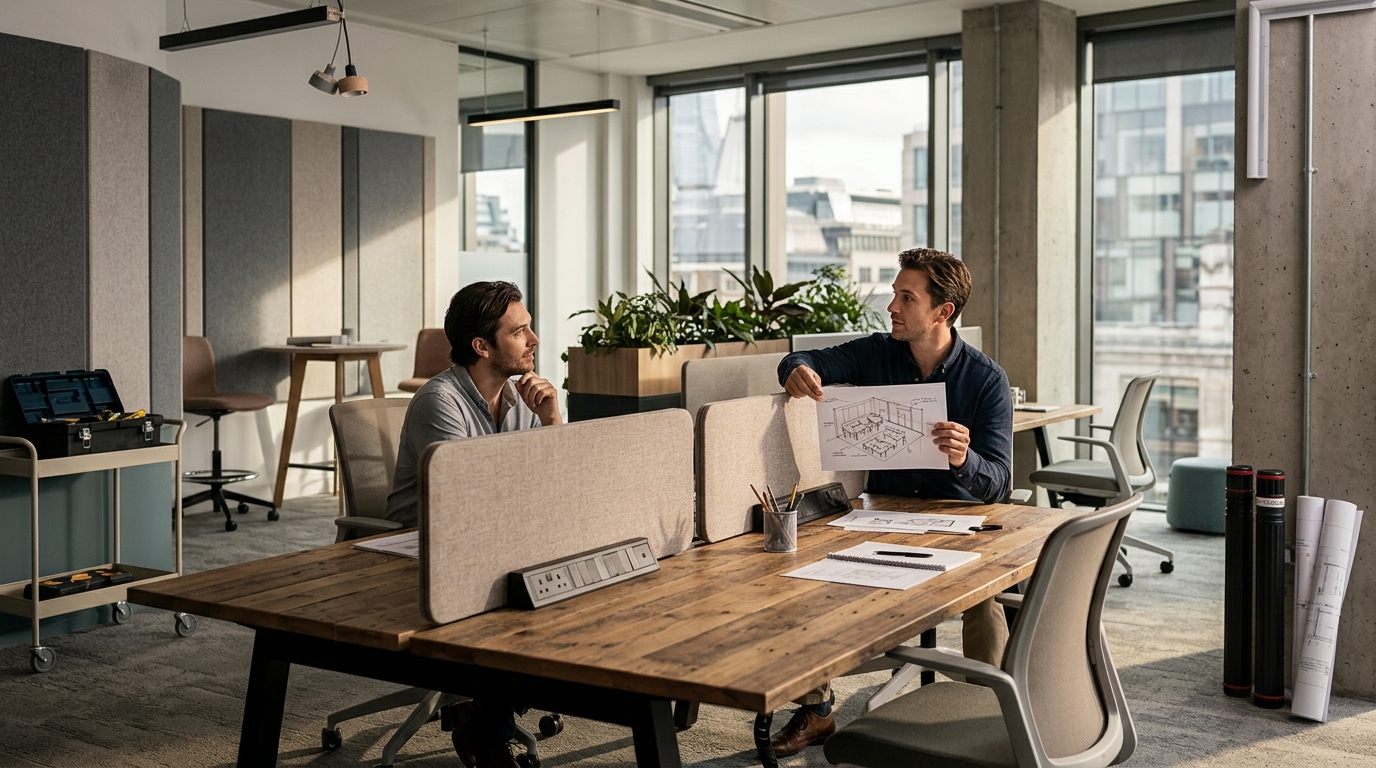
Yes, you can redesign your office without moving to a new building. In fact, an in-situ transformation often delivers higher cultural alignment and lower operational risk than a full relocation. This guide explains how to reconfigure space, upgrade acoustics, and integrate technology while keeping your team in the same location.
Why Staying Put Beats Relocating
Relocation is often viewed as the ultimate solution for a struggling workplace. However, it introduces significant friction. Moving premises disrupts daily operations, breaks established team dynamics, and incurs high costs for logistics and new fit-outs. An in-situ redesign allows you to transform the environment while preserving the organizational memory and culture that already exists in the building.
At Spectrum Workplace, we have seen that the most successful transformations happen when the strategy is built around the people already in the space. By focusing on the existing footprint, you can address specific pain points like poor acoustics or outdated technology without the massive overhead of a move. This approach ensures that the new design is a direct response to how your team actually works, rather than a generic template applied to a new address.
Office Space Reconfiguration
Creating Zones for Different Work Modes
Modern work requires a variety of settings. You need spaces for deep focus, collaborative brainstorming, and social interaction. By reconfiguring your floor plan, you can create distinct zones that cater to these needs. For example, you might convert a large, noisy open area into a series of smaller team hubs, while carving out a quiet library-style area for individual work.
Optimizing Flow and Connectivity
How people move through a building matters as much as where they sit. A well-reconfigured office improves circulation, ensuring that teams can find each other easily. This reduces the friction of collaboration and helps break down departmental silos. When you redesign in place, you have the freedom to experiment with these flows without the constraint of a new building's fixed structure.
Acoustic Improvements
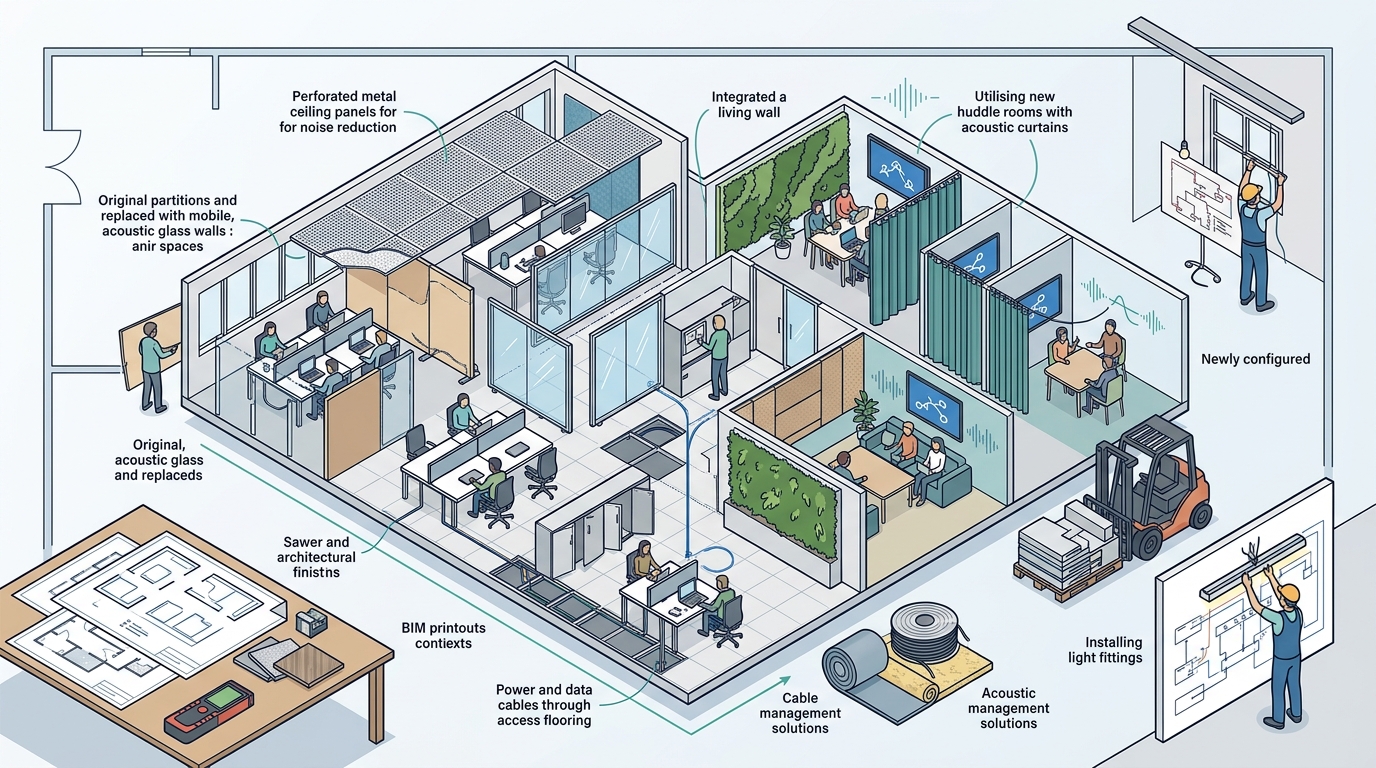
Acoustic comfort is a critical factor in workplace productivity. Noise is the number one complaint in open-plan offices. Addressing this does not require a new building; it requires a strategic approach to sound management. Acoustic treatment is the use of materials and design elements to control sound reflection and absorption.
Managing Open Plan Noise
Open plans can become chaotic if not managed correctly. You can mitigate this by introducing acoustic pods, sound-absorbing panels, and soft furnishings. These elements help to dampen background noise and create pockets of calm. By treating the acoustics as a primary design driver, you ensure that the space remains usable for both focused work and lively discussions.
Enhancing Meeting Room Privacy
Meeting rooms often suffer from poor sound insulation. Upgrading doors, adding acoustic ceilings, and using specialized wall finishes can significantly improve privacy. This is essential for sensitive conversations and client meetings. When you improve the acoustics of your existing rooms, you enhance the quality of every interaction that takes place within them.
Technology Upgrades
Technology is the nervous system of the modern office. An in-situ redesign is the perfect opportunity to upgrade your digital infrastructure. This includes everything from high-speed data cabling to smart lighting and video conferencing systems. Technology integration is the process of embedding digital tools into the physical environment to support seamless work.
Supporting Hybrid Work
For organizations with hybrid teams, the office must be a place where collaboration happens. This requires robust video conferencing setups in every meeting room and reliable Wi-Fi coverage throughout the space. By upgrading your technology during a redesign, you ensure that the office remains relevant and useful for both in-person and remote workers.
Smart Building Features
Smart technology can also improve comfort and sustainability. Sensors can adjust lighting and temperature based on occupancy, reducing energy waste. These systems make the office more responsive to the needs of the people using it. Integrating these features into an existing building is often easier and more cost-effective than trying to retrofit them after a move.
Phased Renovation Strategy
One of the biggest concerns with an in-situ redesign is disruption. A phased renovation strategy allows you to complete the project in stages, minimizing the impact on daily operations. This approach involves dividing the office into zones and renovating them one at a time. It ensures that your team can continue working while the transformation takes place.
Minimizing Operational Disruption
By phasing the work, you can keep part of the office operational at all times. This is crucial for businesses that cannot afford to pause their operations. It also allows you to test the new design elements in one area before rolling them out to the rest of the building. This iterative process helps to refine the final outcome and ensures that the new space meets the needs of your team.
Managing the Project Timeline
A phased approach requires careful planning and coordination. You need to manage the noise, dust, and movement of contractors while your team is working. This is where a professional partner is essential. At Spectrum Workplace, we specialize in managing these complex logistics. We ensure that the construction process is as smooth as possible, with clear communication and strict site management.
Key Takeaways
- Redesigning in place is often more cost-effective and less disruptive than relocating.
- Space reconfiguration allows you to create zones for different work modes.
- Acoustic treatment is essential for managing noise in open-plan offices.
- Technology upgrades ensure the office supports hybrid work and collaboration.
- A phased renovation strategy minimizes disruption to daily operations.
- Working with a specialist partner ensures the project is delivered on time and on budget.
- The goal is to create a space that reflects how your team actually works.
Frequently Asked Questions
Is it cheaper to redesign or relocate?
Generally, redesigning in place is cheaper. You avoid the costs of moving, new rent, and a full fit-out from scratch. However, the exact savings depend on the condition of your current space and the scope of the redesign.
Can we keep working during the renovation?
Yes, with a phased strategy. By dividing the office into zones, you can keep part of the space operational while the other parts are being renovated. This requires careful planning and site management.
How long does an in-situ redesign take?
The timeline varies depending on the scope. A minor reconfiguration might take a few weeks, while a full transformation could take several months. A phased approach can extend the timeline but allows for continuous operation.
What is the first step in redesigning our office?
The first step is to understand how your team currently works. This involves conducting a workplace audit and gathering feedback from staff. This data will inform the design strategy and ensure the new space meets your needs.
Do we need to hire a separate contractor for technology?
It is best to work with a partner who can manage both the physical and digital aspects of the project. This ensures that the technology is integrated seamlessly into the design, rather than being an afterthought.
How do we manage the noise during construction?
Conclusion
Redesigning your office without moving is a powerful way to transform your workplace. It allows you to address specific pain points, improve productivity, and enhance the employee experience, all while keeping your team in a familiar environment. By focusing on space reconfiguration, acoustics, and technology, you can create a space that truly works for your people.
At Spectrum Workplace, we have been guiding organizations through workplace change since 1975. We understand the complexities of in-situ transformations and the importance of getting the strategy right. If you are ready to explore the potential of your current space, we are here to help. Let's talk about how we can help you create a workplace that your people believe in.