

7 Key Factors Driving Office Refurbishment Costs Across UK Regions
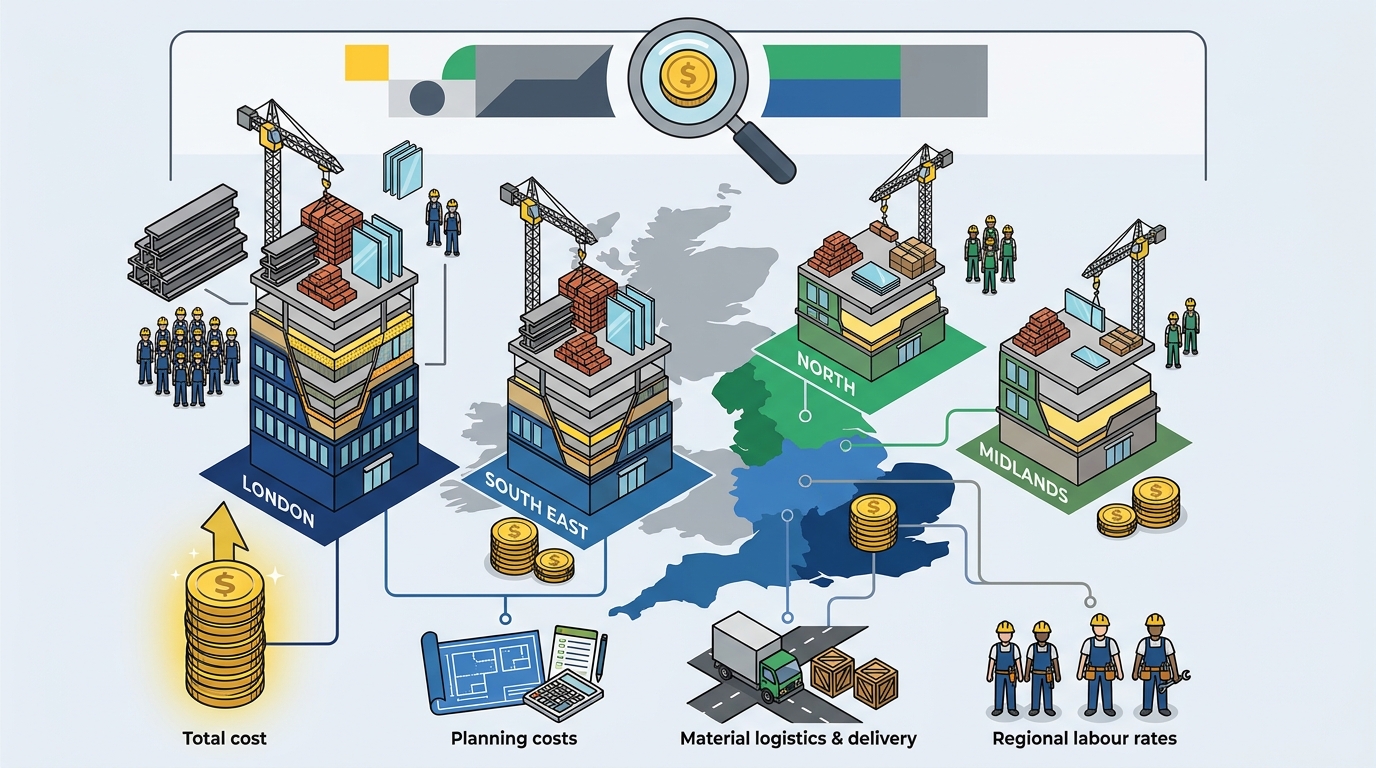
Regional location is the single most significant variable in UK office refurbishment pricing. Labour rates, material logistics, and local building control requirements create distinct cost profiles for London, the South East, the North, and the Midlands. Understanding these regional dynamics allows project leaders to build accurate budgets and avoid costly overruns during the delivery phase. For additional details, review the Contact Spectrum Discuss Your.
1. London and the South East Premium
London commands the highest per-square-foot rates due to labour scarcity and logistical complexity. Central London projects typically sit at the upper end of national cost ranges, often exceeding £140 per square foot for standard fit-outs. The premium reflects higher wages for skilled trades, restricted site access, and the cost of transporting materials into dense urban environments. Businesses in this region must account for these elevated baseline costs when comparing refurbishment against relocation.
2. The Northern Corridor Advantage
Manchester and the North West offer significantly lower labour and material costs than the South. The region benefits from a robust construction supply chain and lower commercial real estate values, which often translates to reduced fit-out budgets. For organisations expanding into the North, this cost efficiency can free up capital for higher-quality finishes or additional technology infrastructure. The price gap between the North and London can be substantial, making regional choice a critical financial decision.
3. The South Coast and South West
Portsmouth and the South West present a middle ground with specific logistical considerations. While labour rates are generally lower than in London, the region faces unique challenges related to site access and local planning constraints. Projects in coastal areas may require additional engineering solutions for environmental factors, which can impact the final cost per square foot. Understanding these local nuances helps in planning realistic timelines and budgets for southern-based operations.
4. The Midlands and East of England
The Midlands offer competitive pricing with strong industrial and commercial infrastructure. Cities like Birmingham and Nottingham have well-established construction markets that keep labour costs moderate. The region's central location also reduces material transport times compared to more remote areas. For businesses looking to balance cost with accessibility, the Midlands often provide an optimal economic environment for office refurbishment projects.
5. Labour Rate Disparities by Region
Skilled trade wages vary significantly, directly impacting the labour portion of the refurbishment budget. Electricians, plumbers, and carpenters in London earn substantially more than their counterparts in the North or Midlands. Since labour typically accounts for a large percentage of total fit-out costs, this wage gap is a primary driver of regional price differences. Project managers must factor in local wage rates when comparing quotes from different regions.
6. Material Logistics and Supply Chain Costs
Transporting materials to remote or congested areas adds hidden costs to the project budget. In dense urban centres like London, last-mile delivery can be expensive and time-consuming due to traffic restrictions and limited loading bays. Conversely, remote rural sites may face higher transport costs due to distance from major distribution hubs. These logistical factors can add several percent to the total project cost and must be included in the initial cost plan.
7. Local Building Control and Compliance Requirements
Regional variations in building control enforcement and local authority requirements can affect project costs. Some areas have stricter interpretations of fire safety or accessibility regulations, which may require additional works or documentation. Navigating these local compliance landscapes requires experienced project management to avoid delays and extra expenses. Engaging with local authorities early in the process helps identify potential compliance costs before they impact the budget.
Frequently Asked Questions
Is it cheaper to refurbish an office in the North of England?
Generally, yes. Labour and material costs in the North are lower than in London and the South East. However, the specific savings depend on the project scope and local market conditions.
How much more expensive is a London office refurbishment?
London projects can be 20% to 40% more expensive than projects in other UK regions. This premium is driven by higher labour rates and logistical challenges.
Do material costs vary by region?
Material costs are relatively consistent nationwide, but transport and handling costs vary. Urban areas like London often incur higher delivery fees due to access restrictions.
How does location affect the timeline of a refurbishment?
Location can impact the timeline through logistical challenges and local authority processing times. Dense urban areas may experience delays due to site access and planning permissions.
Can I use the same budget for a refurbishment in different regions?
No. A budget suitable for a project in the North may not cover the same scope in London. It is essential to adjust the budget based on the specific regional cost profile.
What is the best region for cost-effective office refurbishment?
The North and Midlands often offer the best balance of cost and quality. These regions have strong construction markets and lower labour rates compared to the South.