

Preparing Your Team for a Refurbished Office: A Change Management Guide
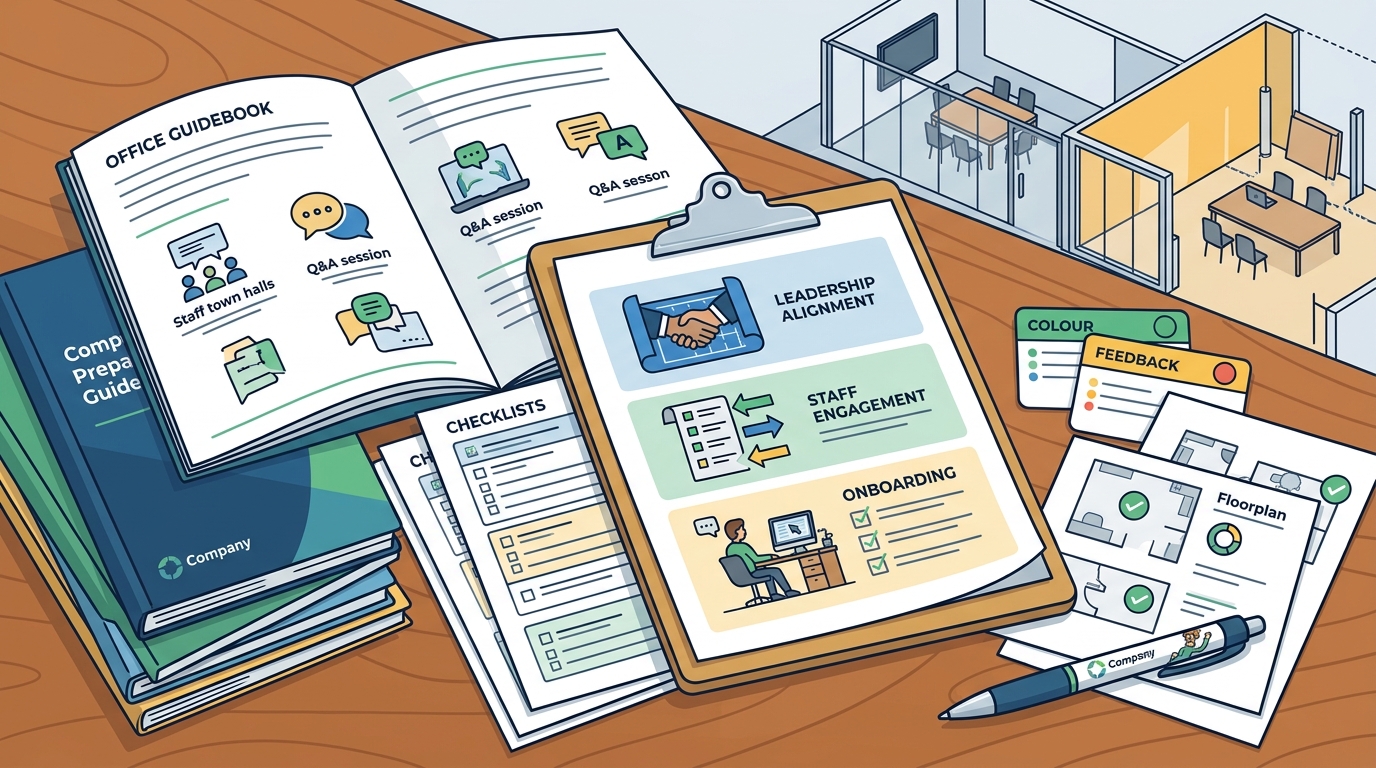
Effective preparation involves clear communication, early stakeholder engagement, and structured onboarding. Spectrum Workplace approaches this by treating workplace change as a people problem before a property one. By aligning leadership and staff early, you reduce resistance and ensure the new space is adopted quickly and effectively.
Why Change Management Matters in Office Refurbishment
Many organisations focus heavily on the physical aspects of a refurbishment, such as layout and finishes, while neglecting the human element. This oversight often leads to underutilised spaces and low staff satisfaction. Change management is the strategic process of guiding individuals and teams through the transition from a current state to a desired future state. When applied to workplace projects, it ensures that the physical environment supports the organisation's culture and operational needs.
Research and industry experience show that employees resist change when they feel excluded from the decision-making process. By involving staff early, you build ownership and reduce anxiety. This approach transforms the office from a passive container into an active tool for productivity and wellbeing.
Aligning Leadership and Stakeholders
The first step in preparing your team is ensuring that leadership is aligned on the vision for the new workspace. Workplace strategy is the high-level plan that defines how the physical environment will support business objectives. Without a clear strategy, design decisions become arbitrary, and staff receive mixed messages.
Spectrum Workplace begins every project with an Align stage, which includes leadership workshops and stakeholder alignment sessions. This ensures that the brief reflects the organisation's genuine requirements. When leaders are united in their vision, they can communicate it consistently to the wider team. This consistency builds trust and sets the tone for the entire transition.
Engaging Staff Through Structured Feedback
Employees are the end users of the new office, and their input is invaluable. However, unstructured feedback can be overwhelming and difficult to act upon. Stakeholder engagement is the practice of involving key individuals in the decision-making process to ensure their needs are met. Structured methods, such as surveys and working groups, help capture meaningful insights without creating noise.
For example, a financial services firm might need a balance between private offices for confidential client meetings and collaborative zones for team brainstorming. By using structured working group facilitation, you can identify these specific needs and incorporate them into the design. This makes staff feel heard and valued, which increases their willingness to embrace the new space.
Communicating the Vision and Timeline
Uncertainty is a major driver of resistance to change. To mitigate this, you must communicate the vision and timeline clearly and frequently. Change communication is the process of sharing information about the change, its benefits, and the steps involved. This should happen well before the physical move begins.
Pre-move communications should include regular updates on the project's progress, answers to common questions, and a clear explanation of what the new space will look like. Visual aids, such as renders or 3D models, can help staff visualise the final outcome. This reduces the fear of the unknown and builds excitement for the move.
Onboarding and Post-Handover Support
The move itself is just the beginning. To ensure long-term success, you need a structured onboarding process. Workplace onboarding is the series of activities designed to help staff adapt to the new environment and ways of working. This includes training on new technology, familiarisation with the layout, and support for any behavioural changes.
Spectrum Workplace runs its own integration process, acting as active participants in the organisation's transition. This ensures that staff arrive informed, engaged, and ready to make the space their own. Post-handover support helps embed new ways of working and addresses any issues that arise after the move. This ongoing engagement is critical for sustaining the benefits of the refurbishment.
Key Takeaways
- Change management is essential for ensuring that a refurbished office is adopted and used effectively.
- Aligning leadership on a clear workplace strategy provides a consistent message to the wider team.
- Structured stakeholder engagement helps capture meaningful feedback and builds staff ownership.
- Clear and frequent change communication reduces uncertainty and builds excitement for the move.
- Workplace onboarding and post-handover support are critical for embedding new ways of working.
- Treating workplace change as a people problem, not just a property one, leads to better outcomes.
Frequently Asked Questions
How early should we start preparing our team for an office move?
It is best to start preparing your team at least three to six months before the move. This allows time for strategy alignment, stakeholder engagement, and structured communication. Starting early reduces anxiety and builds excitement for the new space.
What is the role of leadership in workplace change management?
Leadership plays a critical role in setting the vision and communicating it consistently. Leaders must be aligned on the strategy and act as champions for the change. Their support signals to the wider team that the new workspace is a priority.
How can we involve staff in the design process without overwhelming them?
Use structured methods, such as surveys and working groups, to capture feedback. This ensures that input is meaningful and manageable. You can also use visual aids to help staff understand the design options and make informed choices.
What should be included in a workplace onboarding plan?
A workplace onboarding plan should include training on new technology, familiarisation with the layout, and support for any behavioural changes. It should also include a clear communication plan and post-handover support to address any issues that arise after the move.
How do we measure the success of our change management efforts?
Measure success through metrics such as staff satisfaction, space utilisation, and productivity. You can also use qualitative feedback, such as surveys and interviews, to gauge how well the new space is being adopted. Regular check-ins help identify and address any issues early.