
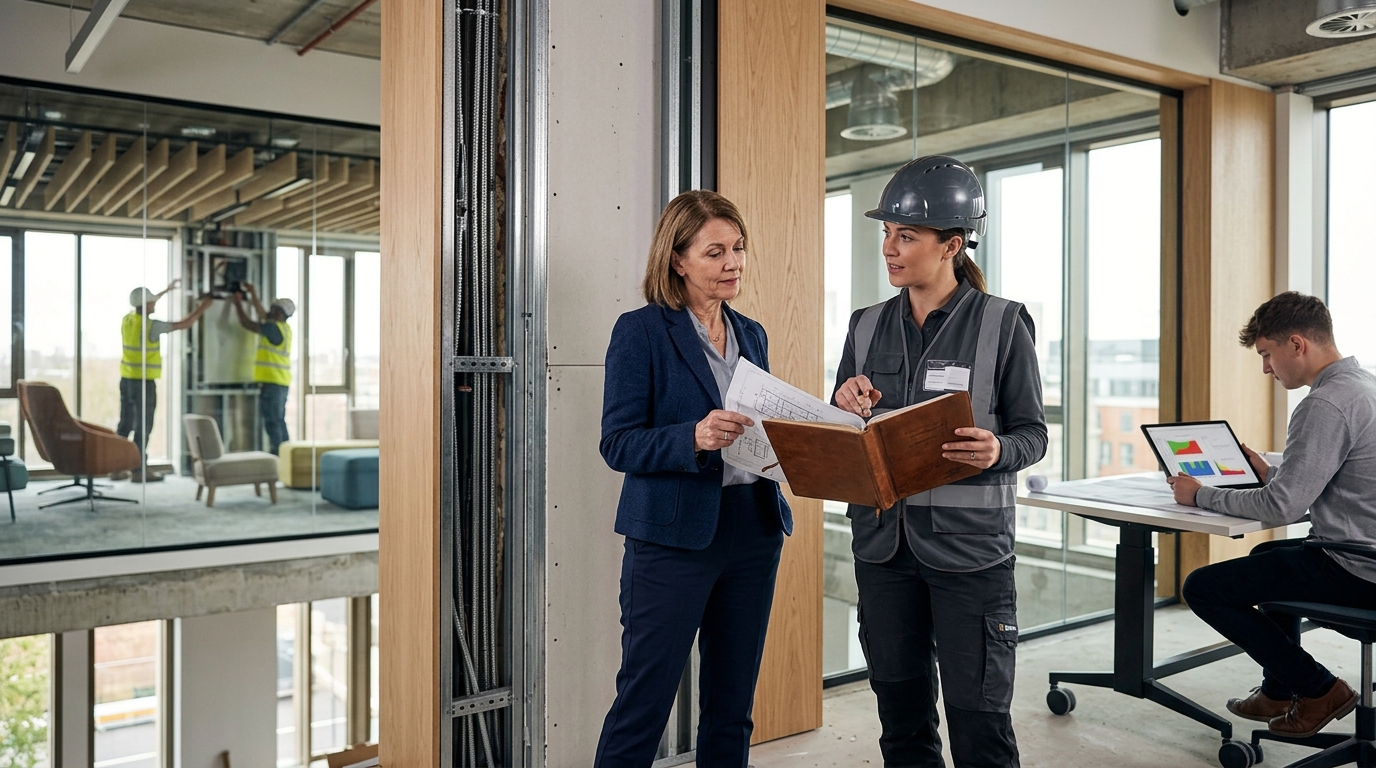
When selecting an independent project manager for an office refurbishment, you should look for a partner with end-to-end technical coordination, progressive budgeting, and a proven track record in occupied building delivery. The right manager aligns strategy, engineering, and construction under one accountable team to protect your budget and timeline.
Defining the Independent Project Manager Role
An independent project manager is a specialist professional who oversees the planning, coordination, and delivery of a construction project on behalf of the client, without being tied to a specific contractor or design firm. In the context of office refurbishment, this role is critical because it bridges the gap between your strategic goals and the physical reality of the building. Unlike a generalist consultant, a dedicated project manager focuses on risk mitigation, statutory compliance, and cost control from day one.
The primary value of this role is objectivity. Because the manager is not selling a specific construction method or design aesthetic, they can advise you on the most efficient path to completion. This independence ensures that decisions are driven by performance and value, not by the commercial interests of a single trade or supplier. For organisations undergoing significant workplace change, this neutrality is the foundation of a successful outcome.
Technical Coordination and Engineering Expertise
A common failure point in office refurbishments is the clash between architectural design and building services. An effective independent project manager must possess deep technical coordination skills, ensuring that mechanical, electrical, and data systems integrate seamlessly with the interior design. This involves managing the complex interplay of HVAC, lighting, and IT infrastructure, which often dictates the final layout and ceiling heights.
Consider a scenario where a new open-plan layout requires increased cooling capacity. A competent manager will identify this requirement during the early design phase, not after the contractor has priced the works. By coordinating engineering disciplines early, the manager prevents costly variations and delays. This technical rigour ensures that the building performs as intended, supporting both employee wellbeing and operational efficiency.
Progressive Budgeting and Cost Control
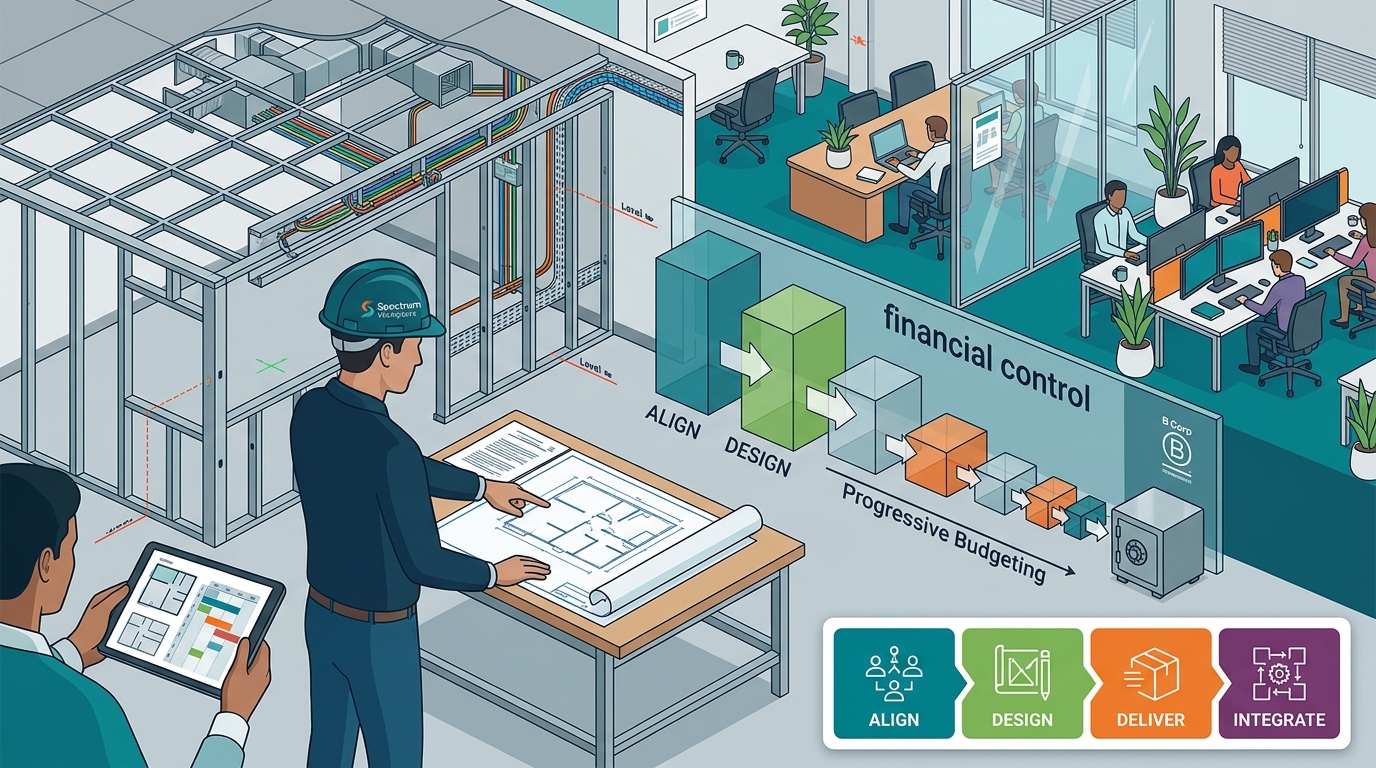
Cost certainty is a primary concern for any refurbishment project. An independent project manager should employ progressive budgeting, a method where costs are validated at every design decision rather than presented as a surprise at contract stage. This approach reduces risk by ensuring that the budget remains realistic as the design develops. It allows you to make informed trade-offs early, when changes are inexpensive, rather than late, when they are costly.
For example, if a premium material specification threatens to exceed the budget, a skilled manager will present clear options for value engineering. They will explain the impact of each choice on quality, durability, and long-term maintenance. This transparency builds trust and ensures that the final project delivers maximum value within your financial constraints. The goal is to protect your investment while maintaining the quality of the finished workplace.
Delivery in Occupied Buildings
Most office refurbishments take place in occupied buildings, which adds a layer of complexity that requires specific expertise. An independent project manager must be experienced in phasing works to minimise disruption to your daily operations. This involves careful planning of noise, dust, and access, ensuring that your team can continue to work safely and productively throughout the project.
Effective communication is key in this context. The manager should provide regular updates on progress, risks, and any changes to the programme. They will coordinate with your facilities team and staff to manage expectations and address concerns promptly. This proactive approach helps maintain morale and ensures that the refurbishment is seen as a positive change rather than a source of stress. The ability to deliver a high-quality project without disrupting business is a hallmark of a skilled independent project manager.
Post-Handover Integration and Adoption
A workplace only creates value when people use it well. An independent project manager should be involved in the post-handover phase, supporting staff onboarding and adoption of the new space. This includes providing guidance on how to use new technologies, furniture, and layouts to their full potential. By staying involved after handover, the manager ensures that the investment delivers the intended benefits in terms of productivity and wellbeing.
This long-term perspective distinguishes a true partner from a transactional contractor. It demonstrates a commitment to the success of your workplace transformation, not just the completion of a construction project. For organisations looking to create a sustainable and engaging workplace, this ongoing support is invaluable. It ensures that the new environment becomes an integral part of your culture and operations.
Key Takeaways
- An independent project manager provides objective advice and end-to-end coordination for your office refurbishment.
- Technical coordination expertise is essential to prevent clashes between design and building services.
- Progressive budgeting ensures cost certainty and reduces the risk of unexpected overruns.
- Experience in occupied building delivery is critical for minimising disruption to your business.
- Post-handover integration support helps your staff adopt and benefit from the new workplace.
- Look for a partner with a proven track record in your specific industry or project type.
- Clear communication and regular reporting are hallmarks of a professional project manager.
Frequently Asked Questions
What is the difference between an independent project manager and a contractor?
An independent project manager works on behalf of the client to oversee the project, while a contractor is responsible for executing the physical works. The manager provides objective advice and coordination, whereas the contractor delivers the construction.
How much does an independent project manager cost?
Costs vary based on the project size and complexity. Typically, project management fees are a percentage of the construction cost or a fixed fee. It is important to get a detailed proposal that outlines the scope of services and associated costs.
Can an independent project manager handle design as well?
Some independent project managers offer integrated design and management services, while others work with separate design teams. It is important to clarify the scope of services and ensure that the team has the necessary expertise for your project.
How do I find a qualified independent project manager?
Look for professionals with relevant qualifications, such as membership in professional bodies like the Association for Project Management (APM) or the Chartered Institute of Building (CIOB). Review their portfolio and ask for references from similar projects.
What should I include in the project brief?
Your project brief should outline your goals, budget, timeline, and any specific requirements. It should also include details about your organisation, culture, and how the new workplace will be used. A clear brief helps the project manager understand your needs and provide accurate advice.
How long does an office refurbishment typically take?
The duration depends on the size and complexity of the project. A small refurbishment might take a few weeks, while a large-scale transformation can take several months. The project manager will provide a detailed programme that outlines the key milestones and completion date.
Partnering for a Successful Workplace Transformation
Choosing the right independent project manager is a critical decision that can make or break your office refurbishment. By focusing on technical expertise, cost control, and delivery in occupied buildings, you can ensure that your project delivers the intended benefits. At Spectrum Workplace, we bring together strategy, design, and delivery under one accountable partner, ensuring that your workplace transformation is built around your people and culture. To discuss your project, .