

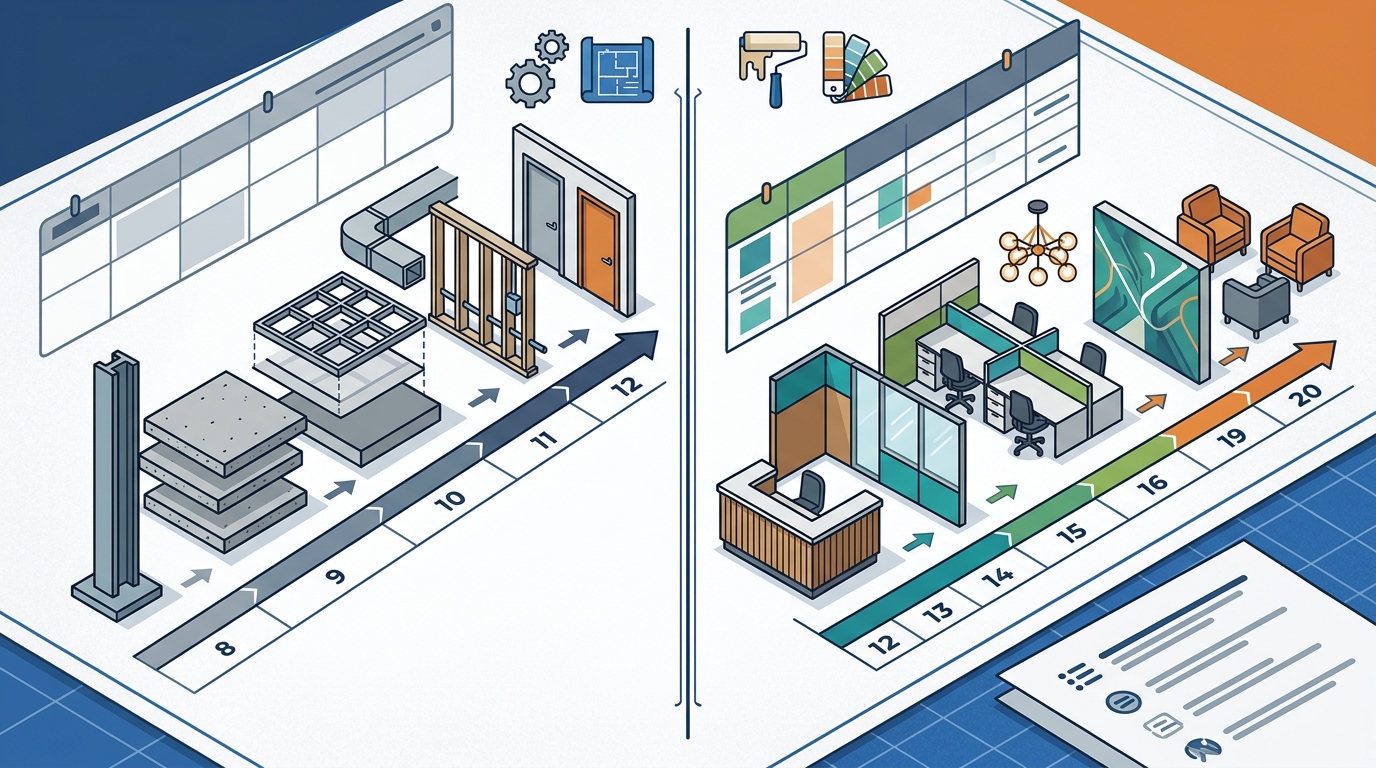
A Cat A fit out is a landlord-driven shell upgrade, typically taking 8 to 12 weeks. A Cat B fit out is a tenant-driven interior design, usually requiring 12 to 20 weeks. The total timeline depends on the complexity of technical systems and the scope of interior finishes.
Understanding the Two Fit Out Categories
Office fit out is the process of preparing a commercial space for occupation. The industry standard divides this work into two distinct categories. Cat A is the base shell, while Cat B is the bespoke interior. Understanding this distinction is the first step in planning your project timeline.
What is a Cat A Fit Out?
Cat A fit out is the preparation of a raw shell space to a basic standard. It typically includes suspended ceilings, basic lighting, raised access flooring, and mechanical, electrical, and plumbing (MEP) systems. This stage is usually completed by the landlord before a tenant takes occupancy. The goal is to create a blank canvas that meets building regulations and basic safety standards.
What is a Cat B Fit Out?
Cat B fit out is the customization of the space to meet the specific needs of the tenant. This includes partitioning, joinery, furniture, branding, and advanced technology integration. It transforms the blank canvas into a functional workplace. The scope of Cat B work varies significantly based on the company's culture and operational requirements.
The Cat A Stage: Shell and Core
The Cat A stage focuses on the building's infrastructure. It is a standardized process that follows a strict sequence of trades. The timeline for this phase is relatively predictable because the scope is limited to basic building services.
Key Activities in Cat A
The primary activities involve installing the ceiling grid, laying flooring, and terminating MEP services. Contractors must coordinate with the building management to ensure compliance with fire safety and structural regulations. This phase requires minimal design input from the tenant, as the finishes are standard.
Typical Cat A Timeline
A standard Cat A fit out typically takes between 8 and 12 weeks. This duration assumes a straightforward floor plate with no major structural changes. Complex buildings or those requiring significant MEP upgrades may extend this timeline. The landlord usually manages this phase, but the tenant should monitor progress to ensure it aligns with their move-in date.
The Cat B Stage: Interior Design and Build
The Cat B stage is where the workplace takes shape. It is a design-led process that requires close collaboration between the tenant, designers, and contractors. The timeline for this phase is more variable due to the bespoke nature of the work.
Design and Procurement
The process begins with a design phase, which can take 4 to 8 weeks. This includes concept design, technical drawings, and material selection. Once the design is approved, the procurement of furniture and joinery begins. Lead times for custom joinery and specialist furniture can add 8 to 12 weeks to the overall project.
Construction and Installation
The construction phase of a Cat B fit out typically lasts 10 to 16 weeks. This includes the installation of partitions, flooring, and finishes, followed by the placement of furniture and technology. The final weeks are dedicated to snagging, cleaning, and commissioning. A well-managed Cat B project ensures that the space is ready for occupation on the planned date.
Factors That Influence the Timeline
Several factors can extend or shorten the fit out timeline. Understanding these variables helps in setting realistic expectations. The complexity of the design and the availability of materials are the two most significant factors.
Design Complexity
A simple open-plan office with standard finishes will be faster to complete than a complex layout with bespoke joinery and specialist rooms. Each additional design element adds time to the approval and construction phases. Clients should finalize their design requirements early to avoid delays.
Material and Furniture Lead Times
Global supply chain issues can impact the availability of materials and furniture. Custom-made items often have longer lead times than off-the-shelf products. Ordering these items early in the design phase is crucial to keeping the project on track. Spectrum Workplace manages this process through progressive budgeting and early procurement planning.
Managing the Project: A Structured Approach
Effective project management is essential for delivering a fit out on time and on budget. A structured approach ensures that all stages are coordinated and that risks are mitigated. This is where the expertise of a workplace transformation partner becomes valuable.
The Align, Design, Deliver, Integrate Framework
Spectrum Workplace uses a four-stage framework to manage workplace projects. The Align stage ensures that the brief is clear and agreed upon by all stakeholders. The Design stage focuses on creating a functional and buildable design. The Deliver stage manages the construction process, and the Integrate stage supports the transition into the new space. This framework provides a clear roadmap for the project.
Progressive Budgeting
Progressive budgeting is a risk management technique that validates costs at every design decision. It ensures that the project stays within budget as the design develops. This approach reduces the risk of cost overruns and provides greater financial certainty. It is a key component of Spectrum Workplace's delivery model.
Key Takeaways
- Cat A fit out is a landlord-driven shell upgrade, typically taking 8 to 12 weeks.
- Cat B fit out is a tenant-driven interior design, usually requiring 12 to 20 weeks.
- The design phase for Cat B work can take 4 to 8 weeks, depending on complexity.
- Procurement lead times for custom furniture and joinery can add 8 to 12 weeks.
- Design complexity and material availability are the two biggest factors affecting the timeline.
- A structured project management framework helps mitigate risks and ensure on-time delivery.
- Progressive budgeting provides financial certainty by validating costs at every design stage.
Frequently Asked Questions
How long does a Cat A fit out take?
A standard Cat A fit out typically takes between 8 and 12 weeks. This duration can vary based on the building's complexity and the scope of MEP works required.
How long does a Cat B fit out take?
A Cat B fit out usually takes between 12 and 20 weeks. This includes the design, procurement, and construction phases. Complex designs with bespoke joinery may take longer.
Can Cat A and Cat B work happen at the same time?
In some cases, Cat B design work can begin while Cat A construction is underway. However, Cat B construction usually starts after the Cat A shell is complete. This ensures that the base structure is ready for interior finishes.
What is the most common cause of fit out delays?
The most common cause of delays is late design approval or changes to the brief. Finalizing the design and procurement schedule early is crucial to avoiding these delays.
Who manages the fit out project?
The project can be managed by the landlord, the tenant, or a third-party workplace partner. Spectrum Workplace provides end-to-end project management, covering strategy, design, and delivery.
How does progressive budgeting work?
Progressive budgeting involves validating costs at each stage of the design process. It ensures that the project stays within budget as the design develops, reducing the risk of cost overruns.
Start Your Workplace Transformation
Planning your office fit out requires a clear understanding of the stages and timelines involved. By working with an experienced partner, you can ensure that your project is delivered on time and on budget. Contact Spectrum Workplace to discuss your project and explore how our structured approach can support your workplace transformation.